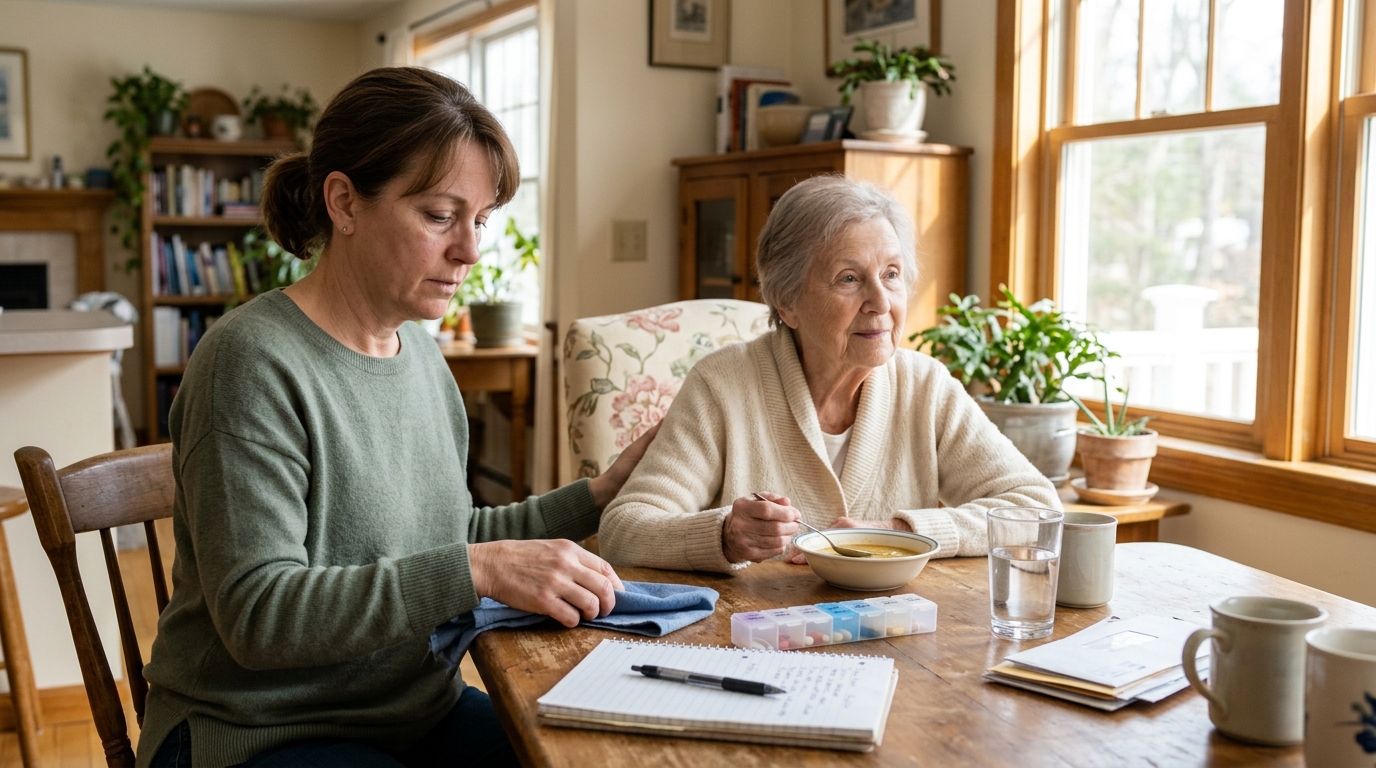
Understanding Instrumental Activities of Daily Living (IADLs): A Guide for Seniors and Family Caregivers
As a parent or loved one gets older, changes in independence do not always happen suddenly. Sometimes, the first signs are small: unopened mail begins to pile up, groceries become harder to manage, medications are confusing, or a previously organized home becomes difficult to maintain.
These changes may indicate that an older adult is having difficulty with Instrumental Activities of Daily Living (IADLs).
IADLs are the more complex everyday activities people need to manage their households, healthcare, finances, and community life. Unlike basic personal-care activities, IADLs often require organization, planning, judgment, mobility, or problem-solving.
Understanding IADLs can help Massachusetts seniors and family caregivers recognize changes early and determine whether additional support could help an older adult continue aging in place safely and comfortably.
The National Institute on Aging (NIA) identifies activities such as shopping, cooking, managing money, taking medications, and transportation as important aspects of functioning independently at home.
What Are Instrumental Activities of Daily Living (IADLs)?
Instrumental Activities of Daily Living (IADLs) are everyday tasks that allow a person to manage their home, health, finances, and community responsibilities independently.
They are different from basic self-care activities because they generally involve more complex planning and decision-making.
Common IADLs include:
- Managing medications
- Paying bills and managing money
- Grocery shopping
- Preparing meals
- Housekeeping
- Laundry
- Using the telephone and communication devices
- Arranging transportation
- Managing medical appointments
- Handling paperwork and household responsibilities
- Using technology for everyday activities
A person may still be able to bathe, dress, eat, and use the bathroom independently while beginning to struggle with IADLs.
For example, an older adult may physically be able to prepare breakfast but have difficulty remembering to purchase groceries, follow a recipe, operate appliances safely, or recognize that food has expired.
That distinction is important for families.
IADLs vs. ADLs: What’s the Difference?
One of the easiest ways to understand IADLs is to compare them with Activities of Daily Living (ADLs).
ADLs generally refer to basic personal-care activities necessary for everyday functioning. NIA identifies activities such as bathing, dressing, grooming, using the toilet, eating, and moving around as examples of basic daily activities.
| ADLs | IADLs |
|---|---|
| Bathing | Grocery shopping |
| Dressing | Meal preparation |
| Toileting | Managing medications |
| Eating | Paying bills |
| Grooming | Managing finances |
| Transferring | Housekeeping |
| Walking/ambulation | Laundry |
| Personal hygiene | Transportation |
| Using the telephone | |
| Managing appointments |
In simple terms: ADLs are primarily about taking care of yourself, while IADLs are about managing your life and household.
Both are important when evaluating whether an older adult can continue living safely and independently.
10 Common Instrumental Activities of Daily Living
1. Managing Medications
Medication management can become complicated when a person takes several prescriptions.
An older adult may need to remember:
- Which medication to take
- How much to take
- When to take it
- Whether it should be taken with food
- When prescriptions need to be refilled
Medication confusion can become a significant concern, particularly for people managing multiple chronic conditions.
If medication management becomes difficult, families should discuss the situation with the person’s healthcare provider or pharmacist rather than simply taking over medications without guidance.
2. Managing Money and Paying Bills
Financial management is another important IADL.
Warning signs may include:
- Unpaid bills
- Duplicate payments
- Unopened financial statements
- Forgotten subscriptions
- Difficulty balancing accounts
- Unusual financial transactions
Financial difficulties do not necessarily mean that an older adult can no longer live independently. However, repeated problems deserve attention.
Families should approach financial conversations respectfully and consider appropriate safeguards when necessary.
3. Grocery Shopping
Shopping requires planning, transportation, mobility, organization, and decision-making.
An older adult who previously enjoyed grocery shopping may begin struggling because of:
- Limited mobility
- Fatigue
- Vision problems
- Difficulty carrying groceries
- Transportation limitations
- Memory changes
Online grocery ordering, delivery services, family assistance, community transportation, or professional home care may provide practical solutions.
NIA identifies grocery shopping, transportation, and household tasks among services that may help older adults remain at home.
4. Preparing Meals
Meal preparation involves much more than cooking.
It can require:
- Planning meals
- Shopping for ingredients
- Following recipes
- Operating kitchen appliances
- Preparing food safely
- Cleaning afterward
Changes in eating habits may sometimes reveal that meal preparation has become difficult.
Watch for unexplained weight loss, an empty refrigerator, spoiled food, repeated takeout meals, or skipped meals.
5. Housekeeping and Maintaining the Home
Keeping a home clean and organized can become physically demanding as people age.
Tasks may include:
- Vacuuming
- Dusting
- Washing dishes
- Taking out trash
- Changing linens
- Cleaning bathrooms
- Organizing household items
A cluttered home may also create additional fall hazards.
NIA recommends considering home modifications and safety improvements to help older adults remain independent at home.
6. Laundry
Laundry requires several steps: sorting clothes, carrying loads, operating machines, transferring clothing, folding, and putting items away.
For someone experiencing weakness, balance problems, arthritis, or mobility limitations, laundry can become surprisingly difficult.
Difficulty with laundry by itself does not necessarily mean professional care is required, but it can be one piece of a larger pattern.
7. Using the Telephone and Communication Devices
Communication is an increasingly important part of independent living.
Older adults may need to:
- Call family members
- Contact doctors
- Schedule appointments
- Speak with pharmacies
- Respond to important messages
- Use smartphones or other devices
Difficulty using technology may sometimes be solved with training or simplified devices.
However, a sudden inability to communicate effectively may warrant further evaluation, particularly when accompanied by other cognitive or functional changes.
8. Arranging Transportation
Transportation affects independence in many ways.
A person may need transportation to:
- Doctor appointments
- Pharmacies
- Grocery stores
- Community activities
- Religious services
- Social events
Losing the ability to drive does not necessarily mean losing independence. Families can explore transportation services, rides from relatives or friends, community resources, or professional assistance.
Maintaining mobility and access to the community can also support overall well-being. NIA notes that maintaining mobility is closely connected with independent living and quality of life.
9. Managing Appointments and Healthcare Needs
Healthcare management can involve considerable organization.
A senior may need to remember:
- Appointment dates
- Provider names
- Follow-up instructions
- Prescription refills
- Laboratory appointments
- Transportation arrangements
- Questions to ask a healthcare provider
A calendar, written schedule, reminders, or assistance from a family member can make these responsibilities easier.
10. Using Technology for Everyday Tasks
Technology has become part of everyday life.
Seniors may use smartphones, computers, patient portals, online banking, telehealth platforms, email, and grocery delivery services.
Technology can be empowering when used appropriately, but it can also become a barrier when devices or applications are difficult to navigate.
Family members can help by simplifying technology, providing written instructions, or finding easier-to-use alternatives.
Why IADLs Matter for Aging in Place
Many older adults want to remain in their own homes as they age. NIA describes this as aging in place and emphasizes that remaining at home safely requires planning and, in some cases, additional support.
IADLs are particularly important because they can reveal changes in independence before a person begins having significant difficulty with basic personal care.
For example, an older adult might still be able to bathe and dress independently but may no longer be able to safely manage medications, prepare meals, shop, or pay bills.
Recognizing these changes early gives families an opportunity to make adjustments before a crisis occurs.
Signs Your Loved One May Be Struggling With IADLs
Families should look for patterns rather than isolated incidents.
Some warning signs include:
Unpaid bills or unopened mail
Important paperwork may begin accumulating because the person is having difficulty organizing finances or responding to correspondence.
Expired food in the refrigerator
Spoiled food, an empty refrigerator, or repeated skipped meals may suggest that shopping or cooking has become difficult.
Missed medical appointments
Forgetting appointments may indicate difficulty managing schedules or healthcare responsibilities.
Medication confusion
Repeatedly asking whether medication has been taken, missing doses, or taking the wrong dose should be discussed with a healthcare professional.
Difficulty shopping
Your loved one may stop shopping because of transportation, mobility, fatigue, or cognitive challenges.
A poorly maintained home
Increasing clutter, dirty dishes, laundry buildup, or other changes may indicate that household responsibilities have become overwhelming.
Difficulty using the phone
Problems communicating with family members, doctors, pharmacies, or other important contacts can affect safety and independence.
Giving up familiar activities
An older adult may stop attending social events, shopping, cooking, or participating in hobbies because these activities have become too difficult.
These signs do not automatically mean that a person needs to move out of their home. They may simply indicate that additional support could make independent living safer and more manageable.
How Family Caregivers Can Help With IADLs
Family caregivers can often make small changes that have a meaningful impact.
Consider:
Create a medication organization system
Ask the pharmacist or healthcare provider about appropriate medication-management tools and routines.
Use reminders
Calendars, phone alerts, written schedules, and other reminders can help with appointments and daily responsibilities.
Automate bills where appropriate
Automatic payments may reduce the risk of missed bills, but financial arrangements should be discussed carefully with the older adult and appropriate professionals.
Help with grocery shopping
Family members can shop together, arrange delivery, or create a recurring grocery list.
Prepare meals in advance
Preparing several nutritious meals at once can make eating regularly easier.
Arrange transportation
Develop a reliable transportation plan for medical appointments, shopping, and social activities.
Attend medical appointments
When appropriate and with the senior’s permission, family members can help take notes and remember questions.
Simplify household responsibilities
Break large chores into smaller tasks and prioritize the activities that affect safety and well-being.
Consider professional support
When IADL difficulties become frequent or begin affecting safety, nutrition, healthcare, or the caregiver’s ability to provide consistent support, professional home care may be worth exploring.
When Should You Consider Professional Home Care?
There is no single IADL that automatically means an older adult needs professional care.
Instead, consider the overall picture.
Professional support may be appropriate when difficulties with IADLs are:
- Increasing in frequency
- Creating safety concerns
- Affecting nutrition
- Leading to missed medications
- Causing missed medical appointments
- Making the home difficult to maintain
- Limiting social activities
- Creating significant caregiver stress
- Making it difficult for family members to provide consistent support
The goal should not be to take away responsibilities that an older adult can safely continue performing.
Instead, the goal is to support the areas where help is needed while preserving the person’s abilities and choices.
NIA notes that family and friends may provide some household and personal support, while professional services can supplement that help when additional assistance is needed.
How A Caring Heart Nursing Services Can Help
At A Caring Heart Nursing Services, our goal is to help individuals remain as independent as possible while receiving appropriate support in the comfort of home. The agency offers services including skilled nursing, Adult Foster Care, and Group Adult Foster Care.
Home Care Services
For seniors who need assistance with everyday activities, Home Care Services can provide personalized support while helping maintain comfort and independence.
Home-based support can be especially helpful when IADL difficulties begin affecting household routines and everyday life.
Skilled Nursing Services
IADLs can also overlap with healthcare management.
For individuals who require professional nursing attention, Skilled Nursing Services can provide individualized nursing support, including health and disease education, medication regimen management, and other services based on the person’s care plan.
Adult Foster Care (AFC)
For eligible Massachusetts residents who require significant daily personal-care assistance, Adult Foster Care (AFC) may be another option to explore.
MassHealth describes AFC as a service involving assistance with personal-care needs, including ADLs and IADLs, with nursing oversight and care management. Eligibility and authorization requirements apply.
Group Adult Foster Care (GAFC)
Group Adult Foster Care (GAFC) is another Massachusetts option for eligible individuals who need personal care and ongoing support in an appropriate community setting. A Caring Heart describes its GAFC services as supporting individuals with daily care while promoting independence.
Important: Difficulty with IADLs alone does not automatically qualify someone for MassHealth, AFC, GAFC, or another specific program. Eligibility depends on the individual’s health needs, functional status, MassHealth coverage, living situation, and the requirements of the specific program.
IADL Checklist for Family Caregivers
Use the following checklist as a conversation starter—not as a medical diagnosis.
Ask yourself whether your loved one can independently and safely:
☐ Manage medications
☐ Pay bills and manage routine finances
☐ Shop for groceries
☐ Prepare meals
☐ Keep the home reasonably maintained
☐ Do laundry
☐ Use the telephone
☐ Communicate with healthcare providers
☐ Schedule and remember appointments
☐ Arrange transportation
☐ Manage routine paperwork
☐ Use necessary technology
☐ Maintain regular social and community activities
If you check several areas where your loved one is struggling, consider having a conversation with them and their healthcare provider about what additional support might be appropriate.
IADLs and Independence: The Goal Is Support, Not Replacement
It is important to remember that needing help with an IADL does not mean an older adult has lost their independence.
In fact, the right assistance can sometimes help a person preserve independence for longer.
For example, a senior may no longer be able to safely grocery shop alone but may still be able to choose their meals, create a shopping list, and participate in preparing food.
A caregiver can assist with the physically difficult parts while allowing the senior to remain involved in decisions.
This approach respects choice, dignity, and autonomy.
Frequently Asked Questions About IADLs
What are the 10 IADLs?
Common IADLs include medication management, managing finances, shopping, meal preparation, housekeeping, laundry, transportation, communication, managing appointments and healthcare needs, and using technology for everyday activities.
Different assessment tools may define or group IADLs somewhat differently.
What is the difference between IADLs and ADLs?
ADLs are basic self-care activities such as bathing, dressing, toileting, eating, grooming, transferring, and mobility.
IADLs are more complex activities required to manage an independent household and community life, such as shopping, cooking, managing money, medications, transportation, and appointments.
Why are IADLs important for seniors?
IADLs help a person manage everyday life independently. Difficulty with IADLs can sometimes be an early indication that an older adult may benefit from additional support.
Can someone need help with IADLs but still live alone?
Yes. A person may need assistance with one or more complex tasks while remaining capable of safely living at home. The appropriate level of support depends on the individual’s overall physical, cognitive, medical, and social circumstances.
Does needing help with IADLs mean someone needs a nursing home?
No. Difficulty with IADLs does not automatically mean someone needs residential care. Families can explore a range of options, including family support, community resources, home care, and other appropriate services.
Does MassHealth cover assistance related to IADLs?
Some MassHealth programs can include assistance with ADLs and IADLs, but coverage and eligibility depend on the specific program and individual circumstances. For example, MassHealth’s AFC program includes personal-care assistance with ADLs and IADLs, along with nursing oversight and care management, for eligible members.
Helping Seniors Stay Independent at Home
Understanding Instrumental Activities of Daily Living (IADLs) gives families another way to recognize changes in an aging loved one’s independence.
The signs can be subtle: missed appointments, difficulty shopping, medication confusion, unpaid bills, or a home that is becoming harder to maintain.
Rather than viewing these changes as a loss of independence, families can see them as an opportunity to provide the right support at the right time.
With thoughtful planning and appropriate assistance, many older adults can continue participating in decisions, maintaining familiar routines, and living safely and comfortably at home.
At A Caring Heart Nursing Services, we understand that every person’s needs are different. Whether your family is exploring home care, skilled nursing, Adult Foster Care, or Group Adult Foster Care, the first step is understanding what kind of support your loved one actually needs.
The goal isn’t to do everything for a senior. It’s to provide enough support to help them continue doing what they can, safely and with dignity.