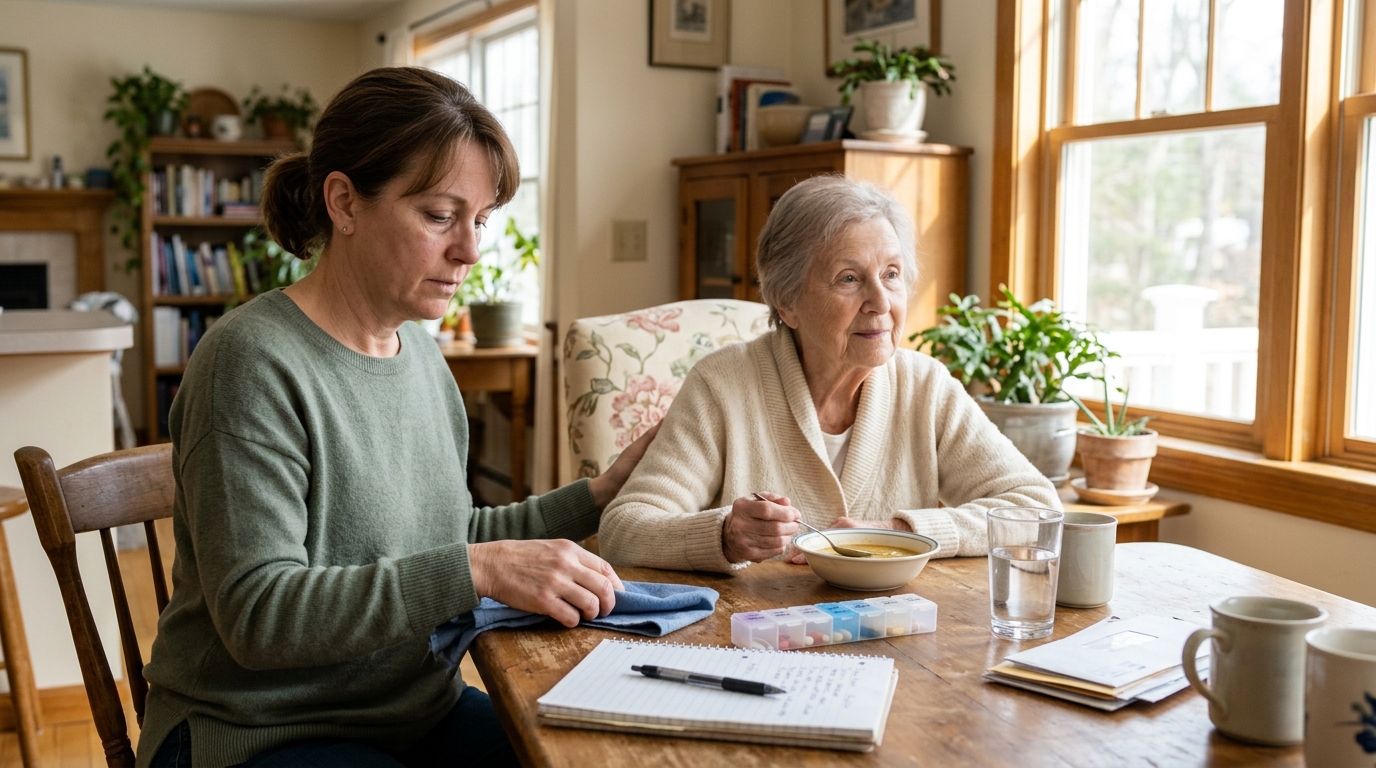
What Happens After a Hospital Stay? A Family Caregiver’s Guide to Safely Transitioning a Loved One Home
Coming home after a hospital stay can feel like a major relief. But for many older adults and their families, the transition from hospital to home is also when new questions begin.
What medications should be taken? Who will help with bathing and dressing? Can Mom safely walk to the bathroom? Does Dad need a nurse at home? How will the family manage everything?
These questions are especially important when an older adult returns home with new medical needs, reduced mobility, a complicated medication schedule, or a greater need for daily assistance.
A safe transition requires more than simply getting through the front door. The family, healthcare providers, and care team need to understand what the person needs at home and how those needs will be managed.
The Agency for Healthcare Research and Quality (AHRQ) emphasizes that effective hospital-to-home transitions should involve patients and families as partners, with attention to medications, warning signs, follow-up appointments, test results, and what life will look like after returning home.
For Massachusetts families, there are also several home and community-based services that may help, including Home Health, Continuous Skilled Nursing, Adult Foster Care (AFC), and Group Adult Foster Care (GAFC). MassHealth currently lists all of these among its in-home services and supports, subject to program eligibility and authorization requirements.
At A Caring Heart Nursing Services, we help individuals and families explore appropriate care options so their loved ones can receive the support they need while remaining as safe and independent as possible at home.
Why the Transition From Hospital to Home Matters
A hospital stay can change an older adult’s daily life very quickly.
Someone who previously managed independently may return home needing assistance with:
- Walking and transferring
- Bathing and dressing
- Medication management
- Meal preparation
- Follow-up appointments
- Monitoring a medical condition
- Understanding new treatment instructions
- Communicating with healthcare providers
The transition can also be challenging because medication changes and incomplete communication can create safety risks. Research on medication safety after hospital discharge emphasizes the importance of clear communication and a structured medication discharge plan for older adults.
That’s why families should begin planning for the return home before discharge whenever possible.
8 Things Family Caregivers Should Do After a Loved One Comes Home
1. Review the Discharge Instructions
Before leaving the hospital, make sure you understand the discharge plan.
Ask questions such as:
- What condition is being treated?
- What medications have changed?
- What symptoms should we watch for?
- When is the next doctor’s appointment?
- Does the patient need therapy?
- Does the patient need nursing care?
- Does the patient need help with personal care?
- Who should we contact if something changes?
Don’t hesitate to ask the healthcare team to explain anything that isn’t clear.
AHRQ’s IDEAL discharge-planning framework specifically recommends discussing what life will be like at home, reviewing medications, identifying warning signs, explaining test results, and making follow-up appointments.
2. Create a Medication Management Plan
Medication changes are common after hospitalization.
Your loved one may have:
- New prescriptions
- Discontinued medications
- Changed dosages
- Different medication schedules
- New instructions about when medications should be taken
Create an up-to-date medication list that includes the medication name, dosage, timing, and prescribing provider.
Keep the list accessible and bring it to medical appointments.
If your loved one has difficulty managing medications independently, ask the healthcare provider whether professional medication support is appropriate.
At A Caring Heart Nursing Services, our Skilled Nursing Services can include medication regimen management and health and disease education as part of an individualized plan of care.
3. Make the Home Safe Before Your Loved One Returns
A home that was safe before hospitalization may not be safe after a change in mobility or strength.
Before your loved one returns, check for:
- Loose rugs
- Cluttered walkways
- Poor lighting
- Electrical cords
- Unstable furniture
- Bathroom hazards
- Stairs without secure handrails
Consider installing grab bars, improving lighting, and keeping frequently used items within easy reach.
This is particularly important if your loved one is returning home with a walker, cane, wheelchair, or new mobility limitations.
4. Understand New Mobility Limitations
Don’t assume your loved one can immediately return to their previous routine.
After hospitalization, they may experience:
- Weakness
- Fatigue
- Balance problems
- Difficulty standing
- Reduced endurance
- Fear of falling
Follow the recommendations of the healthcare team and therapists regarding mobility, transfers, exercise, and assistive devices.
If your loved one needs assistance getting from the bed to a chair, walking to the bathroom, or moving safely around the home, make sure the appropriate support is available.
5. Prepare for Personal Care Needs
One of the biggest challenges after hospitalization is realizing that a loved one may now need help with everyday activities.
These may include:
- Bathing
- Dressing
- Grooming
- Eating
- Transfers
- Walking
- Toileting
These tasks can be difficult for family members to manage alone, particularly when they are balancing work, children, and other responsibilities.
Professional home care may provide the additional assistance needed to help an older adult remain safely at home.
6. Know the Warning Signs
Family caregivers should know what changes require attention.
Depending on the person’s medical condition, warning signs may include:
- Sudden confusion
- Difficulty breathing
- Chest pain
- New or worsening weakness
- Repeated falls
- Significant changes in appetite
- Medication problems
- Fever
- Worsening pain
- Sudden changes in behavior
The appropriate response depends on the person’s condition. Follow the discharge instructions and contact the healthcare provider or emergency services when appropriate.
7. Schedule Follow-Up Care
A hospital discharge is not the end of the care process.
Follow-up appointments may be necessary with:
- Primary care providers
- Specialists
- Nurses
- Physical therapists
- Occupational therapists
- Other healthcare professionals
Keep a calendar of appointments and make sure transportation is available.
A family member or caregiver may also want to attend appointments, when appropriate, to help take notes and understand changes to the care plan.
8. Don’t Try to Do Everything Alone
This may be the most important lesson for family caregivers.
After a hospitalization, families sometimes attempt to handle everything themselves.
They may suddenly become responsible for:
- Medication schedules
- Meals
- Transportation
- Personal care
- Housekeeping
- Medical appointments
- Mobility assistance
- Communication with healthcare providers
This can quickly become overwhelming.
Asking for professional help isn’t a failure. It is part of building a sustainable care plan.
When Does a Loved One Need Skilled Nursing at Home?
Some individuals return home with medical needs that require professional nursing attention.
Skilled Nursing Services may be appropriate when a person needs qualified nursing care as part of a physician-ordered or otherwise authorized plan of care.
Depending on the individual’s needs, skilled nursing may involve:
- Health and disease education
- Medication regimen management
- Clinical monitoring
- Specialized nursing support
- Coumadin management
- Patient and caregiver education
Medicare, for example, covers certain medically necessary part-time or intermittent skilled nursing services at home for eligible beneficiaries, including services such as wound care, patient and caregiver education, injections, and monitoring serious illness. Specific eligibility requirements apply.
MassHealth also recognizes Home Health and Continuous Skilled Nursing as covered service categories, subject to program rules, authorization, and individual eligibility.
Learn more about A Caring Heart Nursing Services’ Skilled Nursing Services:
Skilled Nursing Services at A Caring Heart Nursing Services
When Is Home Care Appropriate?
Skilled nursing isn’t always what a person needs.
Sometimes the primary need is assistance with everyday activities.
For example, a senior may be medically stable but temporarily—or permanently—need help with:
- Bathing
- Dressing
- Grooming
- Eating
- Transfers
- Mobility
- Daily routines
This is where Home Care Services can become an important part of a family’s care plan.
Home care focuses on helping individuals with daily living and personal support while allowing them to remain in a familiar environment.
Explore Home Care Services:
Home Care Services
It’s also important to understand that home health and personal care are not interchangeable terms. For example, Medicare’s home health benefit has specific eligibility requirements and generally does not cover 24-hour care or personal care when that is the only type of care needed.
The right service depends on the person’s health needs, eligibility, insurance coverage, and individualized care plan.
Could Adult Foster Care Help After a Hospital Stay?
For some Massachusetts families, a hospital stay may reveal that an older adult now needs substantially more daily assistance than they did before.
If the individual qualifies, Adult Foster Care (AFC) may be another option worth exploring.
Adult Foster Care is designed for eligible MassHealth members who need daily assistance and can safely live in a community setting with an approved live-in caregiver.
A family member or friend may be able to provide the care under program rules.
This can be particularly meaningful for families who want to keep their loved one at home while creating a more structured caregiving arrangement.
Learn more about Adult Foster Care:
Adult Foster Care Program
Eligibility and program requirements apply, and families should have their situation assessed rather than assuming that a hospital discharge automatically qualifies someone for AFC.
What About Group Adult Foster Care?
Group Adult Foster Care (GAFC) is another MassHealth-supported option for eligible individuals who need assistance with activities of daily living and personal care in an appropriate group-supported residential setting.
MassHealth describes GAFC as including assistance with daily living and personal care, supervision, nursing oversight, and care management for qualifying members.
This may be worth discussing when a person needs ongoing support but may not require the level of care provided by a nursing facility.
Learn more about Group Adult Foster Care:
Group Adult Foster Care Program
How to Choose the Right Level of Support
One of the biggest mistakes families can make is choosing a service based only on the fact that someone has recently been hospitalized.
Instead, ask:
What does the person medically need?
Does the individual require professional nursing care, medication management, monitoring, or disease education?
If yes, discuss skilled nursing or home health with the healthcare team.
What does the person need help doing every day?
If the primary needs involve bathing, dressing, grooming, eating, transfers, or mobility, personal care or home care services may be appropriate.
Can the person safely remain at home?
Consider mobility, cognition, supervision needs, fall risk, the physical environment, and whether an appropriate caregiver is available.
Can the family realistically provide the care?
Be honest about schedules, work commitments, physical demands, and caregiver stress.
What benefits or programs might the person qualify for?
For Massachusetts residents, MassHealth currently includes several home and community-based service options, including AFC, GAFC, Home Health, and Continuous Skilled Nursing. Some services require an order, referral, prescription, or prior authorization.
A Simple Hospital-to-Home Care Checklist
Before your loved one settles back into their routine, make sure you have addressed these areas:
Medical
☐ Discharge instructions reviewed
☐ Medication list updated
☐ Follow-up appointments scheduled
☐ Warning signs understood
☐ Healthcare provider contact information available
Home Safety
☐ Walkways cleared
☐ Bathroom assessed
☐ Lighting checked
☐ Mobility equipment available
☐ Frequently used items accessible
Daily Living
☐ Bathing assistance arranged
☐ Dressing assistance arranged if needed
☐ Meals planned
☐ Transportation arranged
☐ Mobility assistance available
Caregiver Support
☐ Family responsibilities divided
☐ Backup caregiver identified
☐ Professional care options considered
☐ Emergency plan established
How A Caring Heart Nursing Services Can Help
At A Caring Heart Nursing Services, we understand that every family’s situation is different.
A hospital discharge can leave families with more questions than answers. Our goal is to help families understand their options and identify the type of support that may fit their loved one’s needs.
Depending on eligibility and the individual’s care plan, A Caring Heart Nursing Services offers several types of support, including:
Skilled Nursing Services
For individuals who need professional nursing attention in the comfort of home.
Home Care Services
For individuals who need assistance with personal care and daily activities.
Adult Foster Care
For eligible individuals who may benefit from daily hands-on care from an approved live-in caregiver.
Group Adult Foster Care
For eligible individuals who need personal care, nursing oversight, and care management in an appropriate group-supported setting.
These services aren’t interchangeable, and not every service is appropriate for every individual. A healthcare provider, care manager, or program representative can help determine which services may be appropriate based on the person’s needs and eligibility.
What Families Should Remember
Coming home from the hospital is an important milestone, but it is only the beginning of the next stage of care.
A successful transition requires preparation, communication, medication management, home safety, follow-up care, and—when necessary—the right professional support.
Most importantly, families don’t have to figure everything out alone.
If your loved one has returned home from the hospital and you’re unsure what kind of help they need, start by talking with their healthcare provider and reviewing the discharge plan. From there, explore the home and community-based services for which they may qualify.
For Massachusetts families, options such as Home Health, Continuous Skilled Nursing, Adult Foster Care, and Group Adult Foster Care may provide different types of support depending on individual circumstances.
At A Caring Heart Nursing Services, we’re committed to helping individuals receive compassionate, personalized support while promoting comfort, dignity, independence, and safety at home.
Frequently Asked Questions
How soon should you arrange home care after a hospital discharge?
Ideally, care needs should be discussed before the person leaves the hospital. This gives the family and care team time to arrange medications, equipment, appointments, and appropriate services.
Does everyone coming home from a hospital need skilled nursing?
No. Skilled nursing is intended for individuals whose medical needs require skilled nursing services. Some people may only need personal care or family assistance, while others may require skilled nursing, therapy, or a combination of services.
Does Medicare pay for care at home after hospitalization?
Medicare may cover certain medically necessary home health services for eligible beneficiaries who meet specific requirements, including needing qualifying skilled services and being certified as homebound. Medicare generally does not cover 24-hour home care or custodial/personal care when that is the only care needed.
Does MassHealth offer home-based care?
Yes. MassHealth currently lists Home Health, Continuous Skilled Nursing, Adult Foster Care, and Group Adult Foster Care among its in-home services and supports. Eligibility, authorization, and program requirements vary.
Can a family member provide care after a hospital discharge?
In some circumstances, yes. For example, an eligible MassHealth member may be able to participate in Adult Foster Care with an approved live-in caregiver, subject to program requirements. Families should have eligibility assessed before making assumptions about coverage or caregiver arrangements.
Final Takeaway
The goal after a hospital stay isn’t simply to get your loved one home, it’s to make sure they can stay home safely.
With the right discharge plan, medication management, home safety measures, family involvement, and appropriate professional support, the transition can be much more manageable.
If you are helping a parent, spouse, or loved one transition home after hospitalization, A Caring Heart Nursing Services is here to help you explore your care options.
Compassionate care. Personalized support. Helping families feel confident at home.